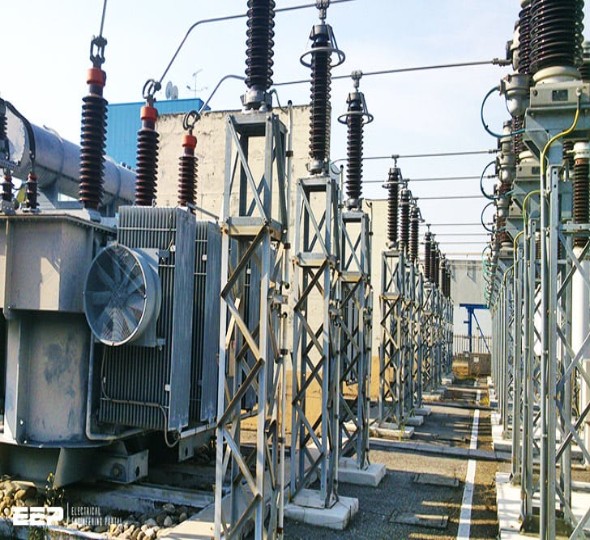
This structured workflow ensures that electrical substation and transmission line projects meet high standards of engineering excellence. By combining rigorous planning, precise execution, and sustainable maintenance practices, industrial electrical projects can deliver reliable power while minimizing risks and costs.
1. Site Assessment and Planning
Conduct load flow studies and fault analysis
Assess soil resistivity for earthing design
Identify right-of-way for transmission lines
Obtain necessary permits and clearances.
2. Design and Engineering
Prepare single-line diagrams (SLD)
Specify transformer ratings, CT/PT specifications
Design busbar, switchgear, and protection schemes
Ensure compliance with IEC/IEEE standards.
3. Procurement and Material Handling
Float tenders and evaluate vendor offers
Inspect equipment for factory acceptance tests (FAT)
Arrange secure transportation and storage
Verify material against BOQ and specifications
4.Construction and Installation
Construct foundations, cable trenches, and control rooms
Install transformers, breakers, isolators, and busbars
String conductors and insulators for transmission lines
Follow strict safety protocols and PPE usage
5. Testing and Commissioning
Perform insulation resistance and HV tests
Conduct relay coordination and protection testing
Verify SCADA and communication systems
Energize system under controlled supervision.
6. Operation and Maintenance
Schedule preventive maintenance for equipment
Monitor load, voltage, and harmonics
Train staff for emergency response
Implement digital monitoring and predictive analytics